I Teach Awesome Kids – Autism Awareness
First Impressions: Warm, Clear, and Purposefully Simple
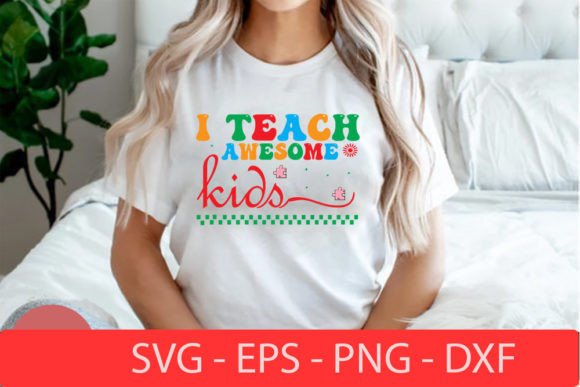
When I opened the I Teach Awesome Kids – Autism Awareness design for the first time, what stood out wasn’t flashy detail—it was intention. The layout is clean and centered, with balanced spacing between the phrase and the autism awareness ribbon. It reads instantly, even at small sizes. As a designer who’s stitched hundreds of teacher-themed pieces—from classroom aprons to parent appreciation totes—I immediately pictured this on a soft cotton tote bag for a special education paraprofessional. No clutter. No competing elements. Just warmth, quiet pride, and quiet advocacy.
Fits Naturally Into Real Embroidery Projects
This isn’t a “just add water” graphic—it’s a thoughtful embroidery file that behaves well across common handmade applications. I tested it as a machine embroidery design on midweight cotton twill (for an embroidered patch), lightweight French terry (for a custom sweatshirt), and even linen-blend tea towels. In every case, the letterforms held up without crowding, and the ribbon shape translated cleanly into satin stitch without distortion. It works especially well for custom apparel, personalized gifts, and boutique merchandise where clarity matters more than complexity—think baby onesies for early intervention teachers, embroidered pillow covers for therapy rooms, or holiday gift sets for school staff.
Where It Shines—and Where to Pause
I Teach Awesome Kids – Autism Awareness excels on stable, medium-weight fabrics: canvas totes, structured caps, woven aprons, and cotton-blend tees. Its moderate height-to-width ratio makes it forgiving in standard 4×4 hoops, and the open letter spacing avoids dense fill stitch traps that cause puckering on stretchy knits. That said, I’d avoid using it full-size on thin baby jersey or highly textured fleece without adjusting stitch density or adding tear-away + cutaway stabilizer combo. On dark fabric, I recommend testing thread colors first—especially for the ribbon, which benefits from a bright, recognizable hue (teal, gold, or purple) to maintain visual recognition.
Small Details Matter—Especially for Handmade Credibility
The “R” in “Awareness R” is subtle but important: it signals registered awareness symbolism, not just decoration. That nuance elevates the design from generic to meaningful—something customers notice when they hold the finished product. As an Etsy seller myself, I know buyers scroll past dozens of teacher slogans; this one stops them because it feels personal *and* purposeful. That authenticity translates directly to perceived value, repeat orders, and word-of-mouth trust—especially among educators, therapists, and neurodiverse families looking for respectful, joyful representation.
Practical Designer Notes Before You Stitch
- Always test on scrap fabric first—especially if stitching on curved surfaces like caps or layered garments like reversible aprons.
- Review stitch density in your embroidery software. If the original file leans heavy on fill areas, lighten it slightly for breathable fabrics or delicate items like baby clothes.
- Confirm hoop size compatibility. While the design fits comfortably in 4×4, double-check if you’re planning to resize for larger placements (e.g., back-of-sweatshirt).
- Inspect small corners and curves—the ribbon loop and letter terminals are clean, but zoom in to ensure no stray vector points or overlapping paths that could confuse your machine.
- Test black-and-white mockups before finalizing thread choices. This helps spot contrast issues early—critical for light fabrics where white-on-cream can disappear.
- Use proper stabilizer: medium-weight cutaway for knits, tear-away for stable wovens, and fusible + tear-away for lightweight linens.
- Verify licensing before selling finished embroidered items or bundling the digital file. Since this is listed as a T-Shirt Designs Graphics asset, confirm whether commercial use is included—or if attribution or resale restrictions apply.
More Than a Design—It’s a Conversation Starter
I recently used I Teach Awesome Kids – Autism Awareness on a set of embroidered kitchen towels for a local special education nonprofit’s teacher appreciation week. The response? Teachers paused mid-kitchen task to point, smile, and say, “That’s *exactly* how I feel.” That kind of resonance doesn’t come from sharp edges or intricate shading—it comes from smart simplicity, emotional accuracy, and visual calm. For craft business owners, that’s gold: it builds brand consistency across products, strengthens buyer engagement through shared values, and turns everyday items—towels, totes, patches—into quiet acts of recognition.
A Smart Fit for Your Creative Workflow
If you’re an embroidery designer choosing assets for client work, a small shop owner curating boutique branding, or a hobbyist making heartfelt gifts, I Teach Awesome Kids – Autism Awareness earns its place in your library—not because it’s trendy, but because it’s reliable, respectful, and ready. It scales cleanly, stitches predictably, and carries weight without shouting. And in a world full of overdesigned graphics, that kind of quiet confidence is rare. Use it thoughtfully, test it intentionally, and let the message speak for itself.